Uniquely positioned for impact
The Challenge
The African continent is the best placed for agricultural growth with over 10 million sq. km of arable land, a diverse ecosystem and a wealth of mineral resources. Despite its resources and potential, the continent remains a concern for food security, agricultural growth, adaptation to climate change and sustainable economic development. The continents challenges stem from three main factors:
Setting the stage for AATI
The need for sustainable and resilient food systems has never been stronger. Small holder farmers must be included in decision-making, national plans should scale-up support to small holder farmers, and women and youth have to be included in the allocation of resources and support.
Governments need to collaborate with stakeholders to bridge the gap between developing efficient and effective agricultural strategies and ensuring their implementation for impact to small holder farmers. This would provide an enabling environment for the farmer to move from subsistence to entrepreneurship with the creation of jobs and wealth.
The solution – AATI
The launch of the African Agricultural Transformation Initiative (AATI) in July, 2022, presents a unique opportunity to offer solutions to the challenges experienced in the agricultural sector. Over five years (2021-2026), the AATI will seek to establish new (and strengthen existing) national mechanisms designed to enhance delivery of agricultural transformation policies and programmes.
AATI has identified several priority countries for its initial engagements where it is launching a programme to enhance the effective and sustainable acceleration of agricultural and food system transformations. The initial engagements create the opportunity to roll out learnings and extend support to other African countries.
AATI support to specific countries is a combination of three areas based on needs; visioning and strategy operationalization, institutional support and flagship implementation and delivery. As we drive for impact, our values show where our heart lies. We put smallholder farmer interest at the centre of our work, advocate for gender and generation inclusivity, build capacity at national level through developing and/or supporting National agricultural delivery units, and encourage knowledge sharing through collaborations.
I am grateful to our founding partners (IFAD, Bill & Melinda Gates Foundation, McKinsey & Company, and AGRA) who made this initiative possible, and look forward to partnering with other stakeholders to alleviate poverty, promote food security and strengthen climate resilience in the continent.
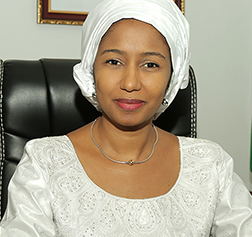
Safia Boly
Executive Director, AATI
Alleviating poverty, promoting food security and strengthening climate resilience by developing and enabling national delivery mechanisms for strategic agricultural initiatives.
Read more about us →
Hosted by the International Fund for Agricultural Development (IFAD), an international financial institution and specialized United Nations agency, we seek to support African countries in implementing their agricultural strategies.
Our goal is to help our host countries realize their full agricultural potential.
We work closely with agricultural delivery mechanisms and the Ministries of Agriculture.
We initiated our engagements in two countries in 2022, and will scale to multiple countries in the coming years.
We aim to bridge the gap between strategy formation and execution, working closely with existing agricultural delivery mechanisms or assisting governments to establish new ones, thereby helping to accelerate agricultural strategy and road map delivery.
The initiative was founded by four partners. Each aims to use their local institutions and networks to maximize the impact of the support model.

The International Fund for Agricultural Development (IFAD) invests in rural people, empowering them to reduce poverty, increase food security, improve nutrition, and strengthen resilience. Since 1978, IFAD has provided US$23.2 billion in grants and low-interest loans to projects that have reached an estimated 518 million people.

Guided by the belief that every life has equal value, the Bill & Melinda Gates Foundation works to help all people lead healthy, productive lives. In developing countries, it focuses on improving people’s health and giving them the chance to lift themselves out of hunger and extreme poverty. In the United States, it seeks to ensure that all people – especially those with the fewest resources – have access to the opportunities they need to succeed in school and life.

AGRA is a farmer-centered, African-led, partnerships-driven institution that is working to transforming smallholder farming from a solitary struggle to survive to a business that thrives. In collaboration with its partners—including African governments, researchers, development partners, the private sector and civil society— AGRA’s work primarily focuses on smallholder farmers – men and women who typically cultivate staple crops on two hectares or less. AGRA is now recognized across the continent as a strong voice for African rural development, a prosperous agricultural economy, and for supporting thousands of small African businesses and millions of African families to improve agriculture as a way to ensure food security and improve their livelihoods.

McKinsey & Company is a global management consulting firm committed to helping organizations realize sustainable, inclusive growth. We work with clients across the private, public, and social sectors to solve complex problems and create positive change for all their stakeholders. We combine bold strategies and transformative technologies to help organizations innovate more sustainably, achieve lasting gains in performance, and build workforces that will thrive for this generation and the next.
Read below our top frequently asked questions about our organization.
The objective of the AATI is to build, and help to coordinate, effective and sustainable delivery mechanisms that can implement policies to facilitate agricultural transformation and prioritize food systems transformation, inclusion and sustainability in sub-Saharan African countries.
The AATI approach is based on partnership. The main focus of AATI support lies on close on-the-ground collaboration with government stakeholders in partner countries to jointly accelerate or enable sustainable and inclusive agricultural transformation. Whilst partner countries will also receive funding through the AATI, countries must be willing to commit funding themselves to join a partnership with the AATI.
The initiative involves establishing national delivery units, with support from a central AATI coordination unit. The central unit works with national delivery units to identify priority areas for inclusive and sustainable agricultural transformation, and assist them in designing policies and projects in these priority areas. The central unit includes a steering committee and a council of advisers providing support and guidance. National delivery units, independent of the AATI coordination unit, are hosted by governments to increase ownership and are intended to become the main drivers of their countries’ food systems transformation.
Support from the central AATI coordination unit will eventually cease, leading to complete ownership of the national delivery unit by each government. Additional coordination and knowledge management will be provided by an institution in Africa, which will be selected based on an evaluation by the AATI coordination unit to determine suitability and readiness. As a result of knowledge management and communications of results achieved, demand for national delivery units is expected to increase in other countries in Africa and beyond, leading to an expansion of national delivery units, informed by insights on what works best in each context.
Countries are selected for the initiative based on their needs and potential for performance, as well as opportunities for learning from other initiatives. The governments of selected countries are required to demonstrate adequate commitment and readiness for transformation.
Strong delivery infrastructure can be defined as a local institution which helps to set and articulate goals and outcomes, coordinates along local actors, monitors progress against these goals, and works closely with and reports directly to the government to ensure aligned transformation activities towards one ultimate strategic goal. They also play a key role in convening actors for implementation and communicating results to ensure ongoing government support and buy-in for jointly established objectives. Finally, they can play a key role in evidence generation and analytics to advise on priority policies based on real evidence.
Sign up now and receive the latest AATI news and updates
direct to your inbox.
[form id=”1371″]

Hosted by IFAD, AATI seeks to support African countries in implementing their agricultural strategies.